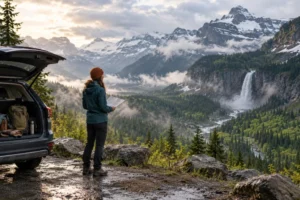

Active travel can be incredibly rewarding. Hiking mountain trails, cycling between towns, walking 25,000 steps through a new city, or spending several days kayaking gives you a very different relationship with a destination than simply watching it through a tour-bus window.
The problem is that enthusiasm can easily outrun recovery.
A demanding itinerary might look realistic when every activity is viewed separately. Combine long flights, jet lag, hotel changes, early mornings, unfamiliar food, heat, altitude, and several physically intense days, however, and fatigue can accumulate quickly.
Learning how to balance physical challenge and recovery during travel is therefore less about doing fewer things and more about arranging them intelligently.
The U.S. National Park Service recommends matching activities to your abilities, considering duration and difficulty, and regularly reassessing whether you still have the energy to continue.
A strong active itinerary should challenge you without making the second half of the journey feel like something you simply need to survive.
1. Build an Intensity Rhythm Into the Itinerary
Avoid organizing a trip according to geography alone.
Also consider how physically demanding each day will be.
Suppose your itinerary includes a six-hour mountain hike, full-day cycling route, city walking tour, kayaking session, and another summit day.
Scheduling the hardest three activities consecutively may be convenient geographically, but it gives your body very little recovery time.
Instead, create an intensity rhythm.
A demanding hike might be followed by a moderate sightseeing day, then another harder adventure. This creates a pattern such as hard → easy → moderate → hard rather than hard → hard → hard.
The NPS specifically recommends choosing activities appropriate to your fitness, endurance, skills, and current condition rather than simply following what other travelers are doing.
That principle becomes even more important on long trips.
Your goal is not to prove that you can complete the first three days. It is to still enjoy Day 10.
2. Treat Recovery Days as Part of the Adventure
A recovery day does not need to mean staying in your hotel room watching television.
Active recovery can still involve exploring.
Take a gentle neighborhood walk, visit a market, ride a scenic train, spend time at a beach, enjoy an easy swim, or explore museums and cafés.
These activities keep you engaged with the destination while reducing physical load.
The National Park Service even recommends having lighter backup activities available for days when conditions change or you simply do not feel capable of completing the original plan.
Place Recovery Where It Matters Most
Do not automatically schedule rest every third day.
Put it after the most demanding sections.
If Days 4 and 5 involve major hikes, Day 6 might be ideal for slower exploration. If you have an overnight flight before arrival, making your first day moderately active can be more sensible than immediately attempting a major physical challenge.
Recovery should respond to the itinerary rather than follow an arbitrary formula.
3. Protect Sleep Like an Important Reservation
Travelers often sacrifice sleep because vacation time feels too valuable to “waste.”
That strategy usually becomes expensive later.
International travel can disrupt circadian rhythms, especially after crossing multiple time zones. CDC’s Yellow Book explains that jet lag can involve disturbed sleep, daytime sleepiness, reduced functioning, and general fatigue.
Sleep loss during travel can make those symptoms worse.
When possible, avoid scheduling your hardest physical activity immediately after a long-haul flight.
CDC guidance recommends adjusting activities to the destination time zone, using daylight strategically, staying hydrated, and avoiding long daytime naps that make nighttime sleep more difficult.
You do not need to optimize every minute of sleep scientifically.
Simply protect a reasonable bedtime before demanding days and avoid turning every evening into another attraction.
Sometimes the best performance upgrade is eight quiet hours behind a hotel door.
4. Fuel the Activity You Actually Planned
Travel eating and sports nutrition do not always cooperate.
You may spend breakfast enjoying pastries and coffee, walk all morning, skip lunch because you are sightseeing, then begin a steep afternoon hike with surprisingly little energy.
Plan food around demanding activities.
That does not mean carrying complicated sports supplements everywhere. It means avoiding long periods of intense movement without enough food and fluids.
WHO notes that healthy diets support active lifestyles and overall well-being, although the exact composition naturally varies according to individual needs and cultural context.
Use local food as part of the strategy.
A substantial breakfast, easy-to-carry snacks, fruit, sandwiches, nuts, or other accessible foods can keep a travel day enjoyable without separating “nutrition” from experiencing the destination.
Do not wait until you are completely exhausted before eating.
Good nutriton is easier when planned before hunger becomes urgent.
5. Hydration Matters More in Heat and Long Activity Days
Walking all day in a city can be surprisingly demanding during hot weather.
Add hiking, cycling, or carrying a backpack and fluid needs become even more important.
CDC guidance for physical activity in hot conditions recommends pacing activity, exercising during cooler parts of the day when possible, drinking more water than usual, and not relying only on thirst as a signal.
The CDC also advises stopping physical activity and moving somewhere cool if you feel faint or weak during heat exposure.
Build drinking opportunities into the route.
Check whether water is available at trailheads, stations, parks, or villages. In remote environments, carry enough rather than assuming another source will appear.
Heat may also justify changing the schedule.
A demanding hike at 6 a.m. followed by a relaxed afternoon could be considerably smarter than beginning the same route at noon simply because that departure time feels more convenient.
Flexibility is part of physical recovery too.
6. Give Your Body Time to Adjust to Altitude
Elevation changes can complicate otherwise excellent adventure itineraries.
Fitness alone does not guarantee comfortable adaptation.
CDC advises gradual ascent for high-altitude travel and notes that travelers going above roughly 8,000 feet (about 2,440 meters) may be at risk of altitude illness. It also advises avoiding heavy exersize during the first 48 hours after arriving above 8,000 feet.
That makes itinerary sequencing important.
Do not necessarily put your highest or most physically demanding mountain objective on the first morning.
Begin with lower-intensity exploration when practical and allow time for adjustment before moving higher.
If symptoms become concerning, do not continue upward merely because another hotel, summit, or tour is booked.
At altitude, the itinerary should adapt to your body – not the other way around.
7. Learn the Difference Between Normal Fatigue and a Stop Signal
Feeling tired after a long hike is normal.
Ignoring every warning sign is not.
Check in with yourself throughout physically demanding activities. The NPS recommends reassessing energy and conditions during outdoor trips and considering breaks or turning around when something does not feel right.
Persistent or severe pain, unusual weakness, fainting, chest pain, serious breathing difficulty, confusion, or worsening altitude or heat-related symptoms are not challenges you need to “push through.” Stop the activity and seek appropriate medical help when serious symptoms occur.
Even less dramatic fatigue deserves attention.
Maybe your legs are simply unusually heavy after four active days. Moving tomorrow’s cycling tour to the following day may preserve the rest of your trip.
A flexible traveler does not see adjustment as failure.
Knowing when to reduce intensity is part of advanced adventure planning.
8. Use Travel Days as Recovery Opportunities
Transfers can either increase fatigue or help manage it.
A complicated airport day involving stairs, luggage, connections, and little sleep is not really a rest day.
A comfortable three-hour train journey might be.
Look at what each relocation actually requires.
If you finish a long trekking section on Tuesday, a relaxed rail journey on Wednesday can create useful downtime before another active destination on Thursday.
Avoid unnecessarily complicated transfers between hard physical days.
One extra connection, early flight, or hotel change adds more fatigue than it appears to add on a spreadsheet.
Your recovry strategy therefore includes transportation design.
Sometimes paying slightly more for a direct route is worth it because you arrive with enough energy to enjoy what comes next.
Balancing physical challenge and recovery during travel is not about making an adventurous itinerary easy. It is about making the challenge sustainable.
Alternate demanding activities with lighter days, protect sleep after major travel, eat and drink according to your actual activity level, and adjust plans for heat or altitude.
Most importantly, pay attention to how your body responds as the journey progresses instead of blindly following a schedule created months earlier.
Before your next active trip, rate every day as easy, moderate, or hard. If too many difficult days sit beside one another, rearrange them and add genuine recovery opportunities.
A well-paced trip may contain slightly fewer extreme days, but you are far more likely to enjoy every one of them.