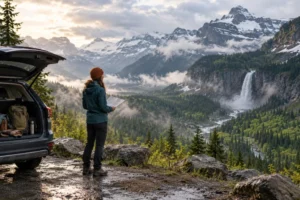
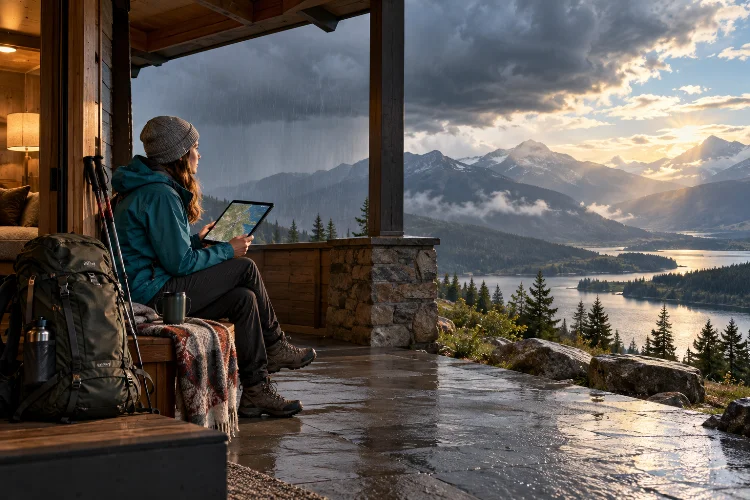
Outdoor trips have one major planning problem that city vacations rarely face: nature does not care about your itinerary.
You can book the perfect mountain cabin six months ahead and still wake up to thunderstorms, strong winds, extreme heat, wildfire smoke, or a trail closure on the morning of your biggest adventure.
That does not mean detailed planning is useless. It means outdoor planning needs a different kind of structure.
Planning outdoor journeys with flexible weather alternatives means creating an itinerary that can change without falling apart.
Instead of depending on one activity happening at one exact time, you build several realistic options around weather, terrain, energy levels, and safety.
The U.S. National Park Service specifically recommends creating backup activities because forecasts change, areas close, parking fills, equipment problems happen, and travelers may simply not feel ready for the original plan.
A flexible plan does not reduce the adventure. It gives you a better chance of actually enjoying one.
1. Create Weather Windows Instead of Fixed Activity Days
The easiest way to make an outdoor itinerary more resilient is to stop assigning every major activity to one exact date.
Suppose you have four days in a mountain region and one exposed summit hike is your main goal. Rather than declaring Tuesday “summit day” months in advance, identify Tuesday through Thursday as possible weather windows.
Use whichever day eventually offers the safest conditions.
The remaining days can hold activities that are easier to move, such as forest walks, scenic drives, cycling routes, visitor centers, photography, or local cultural experiences.
This method becomes especially useful when several activities respond differently to weather.
Strong wind might cancel kayaking but leave a protected woodland trail perfectly manageable. Light rain could make rock climbing unsuitable while creating excellent conditions for waterfalls or forest photography.
Build the itinerary around conditions, not dates.
2. Design a Real Plan A, Plan B, and Plan C
A backup plan should not simply be a less exciting version of the original activity.
It should work under different conditions.
Imagine Plan A is an exposed eight-hour ridge hike. If thunderstorms are forecast, Plan B should not be another high-elevation hike. A lower forest trail or sheltered valley route makes far more sense.
Plan C could be something that works during genuinely poor weather: a recovery day, local museum, scenic drive, equipment check, food experience, or moving to the next destination earlier.
The National Park Service recommends exactly this kind of flexibility, including indoor alternatives when outdoor conditions or personal readiness make the original plan unsuitable.
Keep these alternatives geographically close.
A backup hike that requires a four-hour drive is not particularly useful when weather changes at breakfast.
The best alternatives are simple enough to activate without rebuilding the entire trip.
3. Establish Safety Thresholds Before the Trip
One reason travelers make risky decisions outdoors is emotional investment.
After paying for flights, hotels, rental cars, and permits, it can be difficult to cancel an activity because of weather.
Decide your safety thresholds beforehand.
For thunderstorms, the National Weather Service is clear: no outdoor location is safe when thunderstorms are nearby.
If you hear thunder, you should move to substantial shelter or an enclosed hard-topped vehicle and remain sheltered for at least 30 minutes after the last thunder.
That means “we already walked two hours” is not a reason to continue onto an exposed ridge.
Create similar rules for heat, wind, surf, snow, visibility, or river conditions depending on your activities.
For extreme heat, NWS guidance recommends reducing or rescheduling strenuous activity, staying hydrated, and using cooler periods of the day when conditions become dangerous.
Predefined limits make decisions easier because you are following a rule rather than negotiating with yourself.
4. Match Backup Activities to Specific Weather Problems
Not all bad weather is bad in the same way.
Rain, thunderstorms, high winds, extreme heat, cold, and wildfire smoke require different alternatives.
A rainy day might still support a short woodland hike with appropriate clothing. Thunderstorms require a much more conservative response, especially around peaks, open water, or exposed terrain.
Extreme heat might shift a long hike to sunrise and turn the afternoon into recovery time.
Wildfire smoke creates another type of planning problem because air quality can change quickly during the day.
AirNow’s current AQI tools are designed to help people decide whether conditions are suitable for outdoor activities, with real-time calculations adapting more quickly when pollution changes rapidly, such as during wildfires.
Build alternatives by hazard:
Clear conditions can support exposed hikes, paddling, climbing, or long cycling routes. Moderate conditions may favor lower, shorter, or more sheltered activities. Poor conditions should trigger low-risk or indoor options.
That small framework makes a flexibile itinerary much easier to manage.
5. Pack Gear That Supports More Than One Plan
Weather flexibility becomes much less useful when your equipment only supports Plan A.
Your packing system should make alternative activities possible without carrying an enormous amount of gear.
Versatile layers are particularly useful. A lightweight rain shell, warm mid-layer, sun protection, quick-drying clothing, suitable footwear, navigation tools, water, and basic emergency equipment can work across several outdoor activities.
The National Park Service recommends customizing the outdoor “10 Essentials” to the activity and expected conditions, while also carrying offline navigation because mobile service and battery power cannot always be relied upon.
Leave No Trace similarly recommends preparing for extreme weather, hazards, emergencies, and local regulations before heading outdoors.
Do not carry highly specialized equipement unless you genuinely need it. Renting technical gear locally can make sense for climbing, paddling, cycling, or winter activities.
The goal is not maximum gear. It is maximum adaptability.
6. Make Accommodation and Transport Flexible Too
Weather flexibility should extend beyond daily activities.
Imagine booking three separate mountain lodges on consecutive nights. If severe weather closes a road or makes hiking unsuitable, the entire itinerary becomes difficult to reorganize.
Whenever practical, create multi-night bases.
Spending three or four nights in one location gives you several chances to complete weather-dependent activities without repeatedly moving luggage.
It also makes cancellations less complicated.
Choose accomodation with reasonable modification terms during particularly weather-sensitive sections of the trip. The cheapest non-refundable rate may not represent good value if conditions regularly disrupt access.
Transportation deserves similar thinking.
Avoid scheduling a difficult mountain route immediately before a non-refundable international flight. Leave extra time between vulnerable outdoor sections and major travel commitments.
Flexibility works best when your hotel, transportation, and activity plans can all move together.
7. Use Forecasts Differently as Departure Gets Closer
A forecast six weeks before a trip should not influence your itinerary the same way as a forecast tomorrow morning.
Long-range information can help you understand seasonal tendencies, but it cannot tell you precisely whether your planned hike will be sunny at 10 a.m.
As departure approaches, increase the level of detail.
Several days beforehand, begin checking official local forecasts and hazard information. The night before an activity, examine expected temperature, precipitation, wind, thunderstorms, and any relevant warnings.
Check again in the morning.
Conditions can evolve rapidly in mountains, coastal areas, deserts, and other exposed landscapes.
The National Weather Service recommends checking forecasts before outdoor activities and preparing access to safe shelter before thunderstorms become threatening.
Do not rely exclusively on the weather icon inside a general smartphone app.
Use official forecasts and local sources whenever safety depends on the details.
8. Build Recovery Into Bad-Weather Days
A canceled outdoor activity does not always need to be replaced with another adventure.
Sometimes the best alternative is rest.
Long hiking, cycling, climbing, and paddling trips create accumulated fatigue. A storm arriving on Day 5 may provide the recovery time your body needed anyway.
Use weather delays for laundry, equipment maintenance, food shopping, route research, stretching, sleep, or reorganizing the next section of the trip.
This can improve the days that follow.
Weather alternatives should therefore include both activities and recovery options.
If conditions improve unexpectedly, you can always add something later. But an itinerary packed with replacement activities can become just as exhausting as the original schedule.
Outdoor journeys are often better when not every available hour must be productive.
A quiet afternoon can be a strategy, not a failure.
9. Know When the Backup Plan Means Turning Around
Flexibility is not only about changing activities before leaving your hotel.
Sometimes conditions change after the adventure has already started.
Set a turnaround time and continually assess weather, energy, terrain, and your group’s condition.
If the sky is becoming threatening, the trail is more difficult than expected, or someone is struggling, changing the plan is usually easier earlier than later.
The NPS advises travelers to reassess conditions and personal readiness and activate backup plans when conditions, equipment, or energy levels no longer support the planned activity.
Also share significant outdoor plans with someone who is not participating. NPS recommends leaving a trip plan containing your location, route, activity, and expected return time with a trusted contact.
Flexibility should never mean disappearing onto a completely different route without anyone knowing.
Changing direction is smart. Changing it safely is neccessary.
Planning outdoor journeys around uncertain weather is not about predicting every storm, heat wave, or sudden closure. It is about creating enough alternatives that changing conditions do not destroy the trip.
Use weather windows instead of locking major adventures to specific days. Build genuine Plan A, B, and C options, establish safety thresholds before departure, pack versatile gear, and keep weather-sensitive accommodation and transportation reasonably flexible.
Most importantly, be willing to change the plan after the trip begins.
Before your next outdoor journey, choose each major activity and write down one safer alternative plus one poor-weather option.
That simple exercise can turn an itinerary from fragile into adaptable – and make it much easier to enjoy the outdoors without feeling pressured to fight conditions you cannot control.