Famous attractions are often famous for a good reason. Seeing a world-renowned monument, historic temple, museum, or ancient district can easily become one of the highlights of a trip.
But if your entire itinerary moves from one headline attraction to another, you may leave knowing surprisingly little about how people actually live there.
Learning how to explore local culture beyond major tourist attractions means widening your idea of what counts as sightseeing.
Culture also lives in neighborhood cafés, morning markets, family restaurants, public parks, traditional crafts, local celebrations, religious practices, music, and the small routines people repeat every day.
UNESCO describes intangible cultural heritage as including traditions, performing arts, social practices, rituals, knowledge, and traditional craftsmanship – not simply physical monuments.
You do not need to avoid famous places to travel more deeply. Visit the landmarks you genuinely care about, then create enough space in your itinerary to experience the destination beyond its tourism checklist.
1. Explore Neighborhoods Instead of Staying in the Tourist Center
Historic centers are convenient, but they often represent only one small part of a city.
Open a map and look beyond the streets surrounding the major attractions. Search for residential areas, university districts, traditional commercial streets, creative neighborhoods, waterfront communities, and areas known for local food.
Then choose one neigborhood and spend a few hours walking without trying to complete a list of attractions.
Notice what people buy, where families gather, what kinds of shops appear repeatedly, and how public spaces are used. These everyday details can reveal differences in lifestyle that are almost invisible inside heavily visited tourism zones.
This does not mean entering private spaces or treating residential communities as entertainment. Explore respectfully, stick to public areas, and remember that people’s homes and workplaces are not tourist exhibits.
The goal is simply to experience a broader version of the destination.
2. Visit Markets With a Purpose
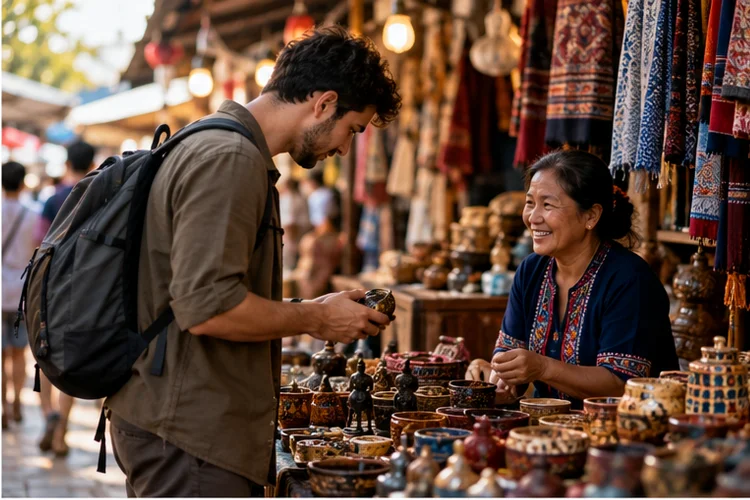
Markets are excellent places to understand local culture because food, language, commerce, and daily routines meet in one space.
Instead of arriving only to take photographs, slow down and observe what people are buying.
Look at seasonal fruit, seafood, spices, bread, prepared meals, clothing, flowers, household products, and traditional ingredients. You may notice that everyday food culture looks very different from the dishes promoted in tourism brochures.
Morning is often a useful time to visit because many markets are still serving local shoppers rather than primarily catering to visitors.
If something interests you, buy a small portion and ask a simple question when communication is possible. Vendors may explain how an ingredient is eaten or when a particular food is traditionally prepared.
UNESCO’s sustainable tourism guidance emphasizes experiences and services that can provide visitor value while also benefiting local businesses and communities.
A market visit becomes more meaningful when you participate economically rather than simply using it as a photo backdrop.
3. Search for Living Traditions, Not Only Historic Buildings
Heritage is not always something behind glass.
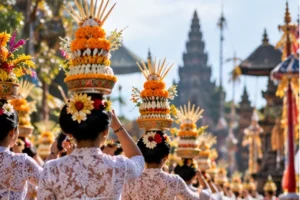
Some of the most interesting cultural experiences involve traditions that people continue practicing today, including music, festivals, craftsmanship, oral storytelling, cooking techniques, rituals, and knowledge passed between generations.
UNESCO specifically recognizes these forms of living heritage and notes that they are continually recreated by communities as circumstances change.
Before traveling, search for traditional crafts practiced in the region.
Maybe the destination is known for ceramics, textiles, woodwork, metalwork, musical instruments, weaving, or a particular cooking method. Look for workshops where the craftsperson or community involved actually leads the experience.
This creates a different relationship with culture.
Instead of simply looking at an old object in a museum, you begin understanding the skill, time, and knowledge required to create it.
And remember that traditions evolve. Something does not become less authentic simply because younger generations use modern tools or reinterpret older styles.
4. Let Local Food Lead You Away From Tourist Routes
Food is one of the easiest ways to move beyond conventional sightseeing.
The restaurants surrounding famous landmarks are convenient, but they rarely represent the complete local food scene.
Explore streets near offices, universities, transport hubs, residential districts, and markets. These areas often contain bakeries, lunch counters, family restaurants, cafés, and inexpensive food businesses serving regular customers.
Ask specific questions when requesting recommendations.
Instead of asking hotel staff for “the best restaurant,” try asking where they would personally go for breakfast, a casual lunch, or a particular regional dish.
That small change can produce a much more useful recomendation.
Do not chase an unrealistic definition of authenticity either. Local people eat traditional dishes, but they also eat sandwiches, contemporary cuisine, takeaway meals, international food, and supermarket lunches.
Modern food culture is still culture.
5. Look at Local Event Calendars
Temporary events can offer cultural experiences that no permanent attraction can reproduce.
Before and during your trip, check municipal websites, cultural centers, theaters, libraries, universities, community organizations, and local event listings.
You may find neighborhood festivals, concerts, religious celebrations, food events, craft fairs, exhibitions, public lectures, traditional performances, or seasonal markets.
These events can help connect your trip to a specific moment rather than a generic tourism itinerary.
But cultural participation should remain respectful.
Some religious ceremonies, rituals, or community gatherings may welcome visitors, while others have restrictions around photography, participation, clothing, or access.
UNESCO’s heritage framework stresses respect for the communities that create, maintain, and transmit cultural practices.
When uncertain, observe first and ask before photographing or joining an activity.
Being respectfull usually requires more awareness than expertise.
6. Choose Locally Led Cultural Experiences
Who tells the story of a destination matters.
When possible, book walking tours, workshops, cooking classes, food experiences, or cultural activities led by people with a genuine connection to the community or tradition being discussed.
ICOMOS’s cultural heritage tourism guidance emphasizes the involvement of host communities, including traditional and Indigenous custodians, in tourism planning and management.
That principle can guide individual travelers too.
Before booking a cultural experience, check who operates it. Is it a local guide? A craft cooperative? A community organization? A family business?
You do not need to avoid larger travel companies completely. The idea is to make some of your tourism spending reach the people whose knowledge and communities make the destination interesting.
Locally led experiences can also add nuance.
A resident may explain how a neighborhood has changed, why a particular tradition matters, or how local people feel about tourism – details that rarely appear on standard attraction descriptions.
7. Spend More Time in Fewer Places
It is difficult to notice local culture when every morning begins with packing a suitcase.
Slower travel creates opportunities for repetition, and repetition helps places become familiar.
Return to the same café. Walk through the same square at different times. Visit a market twice. Use the neighborhood grocery store instead of constantly eating in tourism districts.
After several days, you may begin noticing patterns.
You recognize when shops open, which public spaces become busy in the evening, what people order for breakfast, or how a quiet neighborhood changes after work.
UNESCO’s sustainable tourism toolkit highlights the importance of managing visitor behavior and movement so tourism can protect heritage, improve visitor experiences, and reduce negative effects on host communities.
For individual travelers, spending longer in fewer places can support the same idea.
You consume less of the destination as a checklist and gain more time to understand it.
8. Use Public Transport and Walking as Cultural Tools
Getting around is not simply a logistical problem.
Public transportation can reveal how a destination is organized and connect you with districts you would never encounter on a standard tourist route.
Take a tram to a local market. Ride a suburban train to a smaller town. Walk between neighborhoods instead of traveling directly from attraction to attraction.
The journey itself provides context.
You notice architecture changing, businesses becoming more residential, different languages appearing on signs, or landscapes shifting as you leave the city center.
Walking is particularly useful because it exposes everything between destinations.
Instead of teleporting from landmark A to landmark B in a taxi, you encounter bakeries, schools, parks, places of worship, local advertisements, street art, and ordinary shops.
Those spaces rarely appear on “Top 10 Things to Do” lists, yet they often create the strongest sense of place.
9. Spend Your Travel Budget More Deliberately
Cultural travel also has an economic dimension.
Tourism can support local communities, but where travelers spend money influences who actually benefits.
UNESCO’s sustainable tourism framework encourages local solutions and stronger engagement with community businesses, while ICOMOS emphasizes tourism approaches that respect host communities and cultural heritage.
Consider buying souvenirs directly from makers rather than generic shops selling imported products.
Choose some independent restaurants, local guides, neighborhood cafés, cultural venues, and locally operated accommodation when they suit your trip.
You do not need every transaction to become an ethical research project.
Simply asking “Who benefits from this purchase?” can improve your choices.
It can also improve your experiance. Meeting the person who created a ceramic piece or prepared a regional dish often gives the purchase a story that a mass-produced souvenir cannot match.
Exploring local culture beyond major tourist attractions does not require abandoning famous landmarks. It requires making room for the parts of a destination that exist between them.
Explore residential neighborhoods, visit working markets, look for living traditions, eat outside tourism zones, attend local events, and choose community-connected experiences when possible.
Walk more, use public transportation, and consider how your spending can support local businesses and cultural practices.
Most importantly, slow down enough to notice ordinary life.
On your next trip, keep one half-day completely free from major attractions. Choose a neighborhood, market, or local event and explore without a checklist.
You may not return with another famous landmark photo, but you could come home understanding the destination far better.