Luxury hotels were once easy to recognize. Think marble lobbies, chandeliers, oversized suites, polished service, and perhaps a rooftop pool. Those details still matter, but modern travelers increasingly experience luxury in less obvious ways.
The lighting beside the bed, how quietly the door closes, the distance between the lobby and your room, the view from breakfast, and even where you can charge your phone can influence how premium a hotel actually feels.
Understanding how hotel design influences the modern luxury travel experience means looking beyond expensive materials. Great hospitality design combines beauty with comfort, functionality, cultural identity, privacy, and increasingly, wellness and sustainability.
Professional hotel evaluators recognize this connection too. The MICHELIN Guide includes excellence in architecture and interior design among its universal hotel-selection criteria, alongside service, individuality, destination connection, and value.
A beautiful hotel can impress you for five minutes. A well-designed hotel continues improving your experience from check-in until the moment you leave.
1. Great Design Shapes the First Emotional Impression
A luxury experience often begins before anyone speaks to you.
The entrance, lighting, ceiling height, scent, materials, furniture placement, artwork, and view from the lobby all communicate what kind of hotel you have entered.
Some properties deliberately create dramatic arrival moments. Others use smaller spaces, warm materials, and residential furniture to make guests feel as though they are entering an elegant private home.
Neither approach is automatically more luxurious.
The important factor is coherence. The architecture, interior design, service style, and destination should feel connected rather than assembled from unrelated trends.
MICHELIN specifically considers both architectural excellence and individuality when evaluating hotels. It also looks at whether a property acts as an “open door” to its destination rather than feeling disconnected from its surroundings.
That explains why memorable luxury hotels often have a strong personality rather than simply expensive furniture.
2. Guestroom Design Determines Everyday Comfort
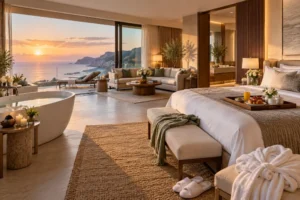
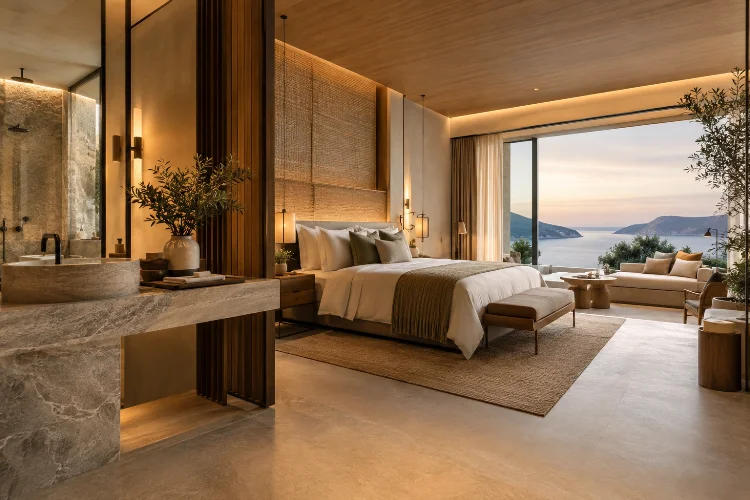
The lobby may create the first impression, but the guestroom determines much of the actual stay.
Cornell’s hotel-design education notes that guests base a significant part of their perception of a hotel on guestroom design and layout.
Consider how many small design decisions affect an ordinary evening.
Is there somewhere sensible to place a suitcase? Can you reach a power outlet from the bed? Does the bathroom offer enough counter space? Can one guest use a light without illuminating the entire room?
Luxury becomes surprisingly practical at this level.
An enormous suite with awkward furniture placement may feel less comfortable than a smaller room designed carefully around human behavior.
Layout Can Matter More Than Size
Square meters are easy to advertise, but usable space matters more.
A well-designed room creates clear zones for sleeping, working, dressing, bathing, and relaxing. Good storage reduces visual clutter, while thoughtful seperation between sleeping and bathroom areas improves privacy.
That is especially important for longer stays, couples with different schedules, and guests who need to work from the hotel.
3. Lighting Can Change the Entire Experience
Hotel lighting does much more than make interiors photogenic.
Guests need different kinds of light throughout the day: bright functional illumination in the morning, focused lighting for reading or working, flattering bathroom lighting, and softer illumination when preparing to sleep.
The WELL Building Standard treats light as an important element of healthy interior environments. Its guidelines aim to support visual comfort while reducing disruption to circadian rhythms and supporting sleep quality.
For travelers, the lesson is practical.
A luxury room should give you control.
You should not need to turn on every ceiling light just to find something in your suitcase, and you should not need an engineering degree to switch everything off at bedtime.
Natural daylight is valuable too. Large windows, views, and thoughtful orientation can make a hotel room feel substantially more spacious and relaxing.
Sometimes the most luxurious feature is simply waking up to good natural light.
4. Acoustic Design Is an Invisible Form of Luxury
You rarely photograph soundproofing for social media.
You definitely notice when it is missing.
A room can have designer furniture, premium toiletries, and an incredible city view, but hearing elevators, hallway conversations, traffic, plumbing, or the television next door can destroy the luxury experience.
Acoustic comfort is therefore one of the most underrated aspects of hotel design.
WELL’s comfort framework addresses exterior noise intrusion, internally generated noise, reverberation, sound-reducing surfaces, and barriers because unwanted sound can disrupt relaxation and comfort.
Hotels can respond through wall construction, door seals, softer materials, intelligent room placement, quieter mechanical systems, and better separation between guestrooms and busy public areas.
When reading hotel reviews, search specifically for comments about noise.
Good acoustic design is almost invisible because nothing happens – and that silence can be one of the most valuable features you pay for.
5. Modern Luxury Design Supports Wellness
Luxury hospitality increasingly overlaps with wellness.
That does not mean every hotel needs a giant spa.
Wellness can appear through fresh air, natural light, temperature control, comfortable furniture, greenery, quiet spaces, access to outdoor areas, and rooms that make it easier to sleep.
WELL takes a broad approach to healthy buildings, considering factors such as air, water, light, comfort, movement, and mental well-being. It also highlights design strategies such as access to natural light, quiet zones, biophilic elements, and spaces that support relaxation.
Temperature control matters as well because thermal preferences differ significantly between individuals.
For hotel guests, this means personlized environmental control can feel more luxurious than another decorative object.
A room where you can easily control temperature, lighting, curtains, and sound gives you something genuinely valuable: control over how the space feels.
6. Local Design Creates a Stronger Sense of Place
One criticism of traditional international luxury hotels is that they can feel interchangeable.
Walk inside, close the curtains, and you might struggle to tell whether you are in Singapore, Paris, Dubai, or New York.
Modern hospitality design increasingly treats local identity as an asset.
A hotel might preserve an existing historic building, use regional materials, commission local artists, reinterpret traditional architectural details, or design public spaces around the surrounding landscape.
The Warehouse Hotel in Singapore, for example, occupies a conserved former warehouse connected to the area’s trading history, showing how adaptive reuse can create a property with a distinctive relationship to its location.
This idea also aligns with MICHELIN’s emphasis on individuality and contribution to the destination.
For travelers, a strong sense of place makes the hotel more than accomodation.
The building itself becomes part of the journey.
7. Sustainability Is Becoming Part of Luxury Design
Sustainable hospitality is no longer limited to asking guests whether they want their towels washed.
Building design can influence energy use, water consumption, materials, waste, biodiversity, and how closely a hotel connects with local communities.
The current GSTC Hotel Standard organizes sustainability around four major areas: effective management, local social and economic benefits, cultural heritage, and reducing negative environmental impacts.
Good sustainable design does not necessarily make a property feel less luxurious.
Natural ventilation, restored buildings, local stone or timber, shaded terraces, landscaped courtyards, efficient lighting, and thoughtful reuse of existing structures can improve atmosphere while reducing environmental impact.
PARKROYAL COLLECTION Marina Bay in Singapore, for example, was redesigned around a “garden-in-a-hotel” concept that integrates substantial greenery into an existing large atrium rather than simply replacing the structure.
The strongest approach makes sustainability part of the guest experience rather than an invisible enviromental checklist.
8. Public Spaces Define How Social the Hotel Feels
Luxury hotels are no longer designed only around rooms.
Lobbies, lounges, restaurants, libraries, courtyards, rooftop terraces, coworking areas, and pools can determine how guests interact with the property.
Some modern hotels intentionally create lively public spaces that attract local residents as well as overnight guests. Others emphasize privacy through secluded lounges, private entrances, villas, and quiet gardens.
Neither model is inherently better.
The right design depends on the experience the hotel wants to create.
A solo traveler might appreciate a lobby where sitting alone feels comfortable. A honeymoon couple may prefer greater separation and privacy. Business travelers may value workspaces that allow meetings without returning to their rooms.
This is why hotel design and hotel service cannot be completely separated.
Forbes Travel Guide evaluates both facilities and service, although its rating methodology places heavier emphasis on service and the overall guest experience.
Physical design creates the stage. Hospitality determines how that stage actually feels.
Hotel design has become a major part of modern luxury because travelers experience a property through much more than expensive finishes.
Room layouts influence comfort. Lighting and acoustics affect rest. Public spaces shape social interaction, while architecture and local materials can connect guests more deeply with a destination.
Wellness-focused and sustainable design can improve the experience while responding to changing expectations around health and environmental responsibility.
The best hotels bring all of these elements together without making them feel complicated. Before booking your next luxury stay, look past the dramatic lobby photographs.
Study the room layout, windows, lighting, privacy, public spaces, local character, and guest comments about comfort. Beautiful design may attract you to a hotel, but thoughtful design is what makes you want to stay.