
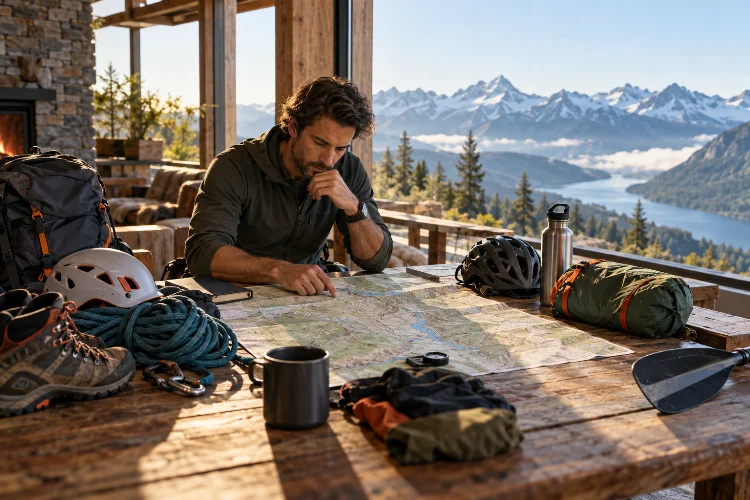
An adventure trip becomes much more complicated when hiking is only one part of it.
Add cycling, kayaking, climbing, rafting, camping, or high-altitude trekking, and suddenly you are planning around different equipment, weather conditions, physical demands, permits, transportation, and safety requirements.
That is where advanced outdoor travel planning for multi-activity adventures becomes useful. The goal is not simply to fit as many activities as possible into one itinerary.
It is to arrange them in a sequence that your body, budget, gear, and schedule can realistically handle.
Outdoor conditions also have a habit of ignoring carefully designed spreadsheets. Trails close, storms develop, water levels change, and fatigue can appear faster than expected.
The U.S. National Park Service recommends checking regulations, permits, gear requirements, current conditions, and backup options before an outdoor trip.
A strong adventure itinerary therefore needs both structure and flexibility. Plan the major logistics carefully, but leave enough room to change direction when nature decides your original plan is no longer the best one.
1. Build the Trip Around Activity Intensity
Do not arrange activities only according to geography.
Also think about how physically demanding each day will be.
A difficult mountain hike followed immediately by a full-day cycling route and then a climbing session may look efficient on paper. Your legs and shoulders may disagree.
Create a rough intensity rating for each activity. A technical climb or long summit hike might be high intensity, while easy paddling, scenic cycling, or a short nature walk could be moderate.
Then avoid stacking too many demanding days together.
Use Recovery Days Strategically
Recovery does not necessarily mean sitting in a hotel all day.
A slower kayaking session, short walk, wildlife tour, easy bike ride, or relaxed town visit can function as active recovery between harder adventures.
This creates rhythm.
Hard day → easier day → hard day is usually more sustainable than trying to perform at maximum intensity for a full week.
The strongest itinerary is not the one that contains the most activities. It is the one you still have enough energy to enjoy near the end.
2. Match Each Activity to the Best Weather Window
Weather affects different outdoor activities in different ways.
Strong wind may ruin a paddling day while leaving a forest hike relatively manageable. Heavy rain can make climbing unsafe but might not completely cancel a sheltered cultural activity.
Instead of locking every outdoor experience to a specific day months in advance, identify which activities are most weather-sensitive.
Mountain routes deserve particular attention.
The U.S. National Weather Service warns that there is no safe outdoor location during a thunderstorm and recommends moving to a substantial building or enclosed hard-topped vehicle when thunder is heard.
In mountainous areas, early starts can also reduce exposure to afternoon thunderstorms.
Keep alternative days available for highly exposed activities.
That way, a bad forecast requires rearranging the itinerary rather than canceling the main experience entirely.
Weather should be treated as a planning variable, not an inconvenience that your itinerary somehow expects nature to ignore.
3. Create One Gear System for Several Activities
Multi-sport travel can create an enormous packing list.
Hiking needs footwear and layers. Cycling may require padded clothing and a helmet. Paddling adds water-resistant storage and specialized equipment. Camping introduces sleeping and cooking gear.
Trying to pack the perfect standalone kit for every activity can quickly become impractical.
Instead, build a gear matrix.
Identify items that work across several activities first: moisture-wicking clothing, lightweight layers, rain protection, sun protection, reusable water bottles, navigation tools, first-aid supplies, and a versatile daypack.
Then add specialized equipment only where necessary.
REI’s current adventure travel guidance similarly recommends choosing multifunctional gear and considering whether your trip is hotel-based, lodge-based, or self-supported before deciding what type of luggage and equipment to bring.
Renting can also make sense.
Bulky or highly specialized equipement such as climbing hardware, kayaks, bikes, or camping systems may be easier to rent locally if reputable providers are available.
Less luggage can make the entire journey easier.
4. Check Permits and Regulations Activity by Activity
Never assume one destination has one set of outdoor rules.
A hiking trail may require no permit while overnight camping on the same route does. A climbing area may require registration. Paddling might be restricted in particular waterways or seasons.
The National Park Service recommends checking regulations, closures, permits, and reservations specifically for the activity you intend to undertake.
Do this before booking non-refundable transportation.
Some wilderness permits have limited quotas or specific release dates. Others may require approved campsites, food-storage systems, or group-size limits.
Create one permit section in your master itinerary.
Record what is required, when applications open, whether documentation must be carried, and what alternative activity you will choose if access is unavailable.
This prevents one missing permit from breaking several days of the trip.
5. Plan Altitude Changes as Carefully as Transport
Trips involving mountains require another scheduling variable: acclimatization.
Your cardiovascular fitness does not make you immune to altitude illness.
CDC guidance states that unacclimatized travelers sleeping at elevations around 2,450 meters (8,000 feet) or higher can be at risk, and the rate of ascent plays a major role. Acclimatization during the first several days at altitude is especially important.
Do not fly into a high-altitude destination and immediately schedule your hardest summit attempt.
Use the first days for easier walking, lower-intensity activities, and adjustment when possible.
If your itinerary combines cycling, trekking, and climbing at elevation, schedule the most demanding activity after some acclimatization rather than at the beginning.
Also be willing to change plans when symptoms appear.
An extra recovry day can protect the rest of the trip. Pushing through illness simply because a particular summit appears on your itinerary can create much larger problems.
6. Build Different Safety Plans for Different Activities
A single emergency plan is not enough when your trip changes environments repeatedly.
The risks on a mountain trail differ from those on a river or lake.
For hiking, route finding, weather, falls, wildlife, hydration, and isolation may matter. Water-based adventures add current, cold-water exposure, swimming ability, and flotation requirements.
The National Park Service strongly recommends appropriate life jackets for water recreation and notes that natural bodies of water involve hazards such as currents, sudden depth changes, cold water, and underwater obstacles.
Before each activity, know the basic emergency procedure.
Where is the nearest road? Is mobile service available? Who knows your route? What time should someone become concerned if you have not returned?
NPS hiking guidance also recommends leaving a trip plan that includes your route, participants, contact information, and expected return time.
Good adventure planning includes knowing how to stop safely, not just how to start.
7. Design Backup Activities for Different Conditions
A useful Plan B should not be a weaker version of Plan A.
It should work under completely different conditions.
If your main plan is a high exposed ridge hike, your backup might be a lower forest route rather than another exposed mountain. If kayaking becomes impossible because of wind, replace it with a trail, indoor climbing session, or local experience.
Leave No Trace specifically recommends preparing for extreme weather, hazards, emergencies, regulations, and high-use periods as part of responsible outdoor trip planning.
Think in categories:
Good weather: summit hiking, exposed cycling, paddling, climbing.
Marginal weather: protected trails, shorter rides, lower-elevation routes.
Poor weather: recovery, gear maintenance, cultural activities, local food, museums, or moving to the next base.
You do not need to schedule every backup option.
Simply know what is available.
A flexibile adventure itinerary wastes fewer days because changing conditions become a route adjustment instead of a crisis.
8. Leave Enough Time Between Activity Bases
Outdoor adventures often happen away from major transportation hubs.
A “three-hour drive” between destinations can become longer after fuel stops, gear collection, groceries, ferry schedules, mountain roads, or trailhead access.
Do not treat relocation days as invisible.
If possible, avoid scheduling a demanding activity immediately after a complicated transfer. Arrive, organize equipment, buy supplies, check conditions, and start fresh the following morning.
This is especially useful when changing activity types.
Moving from a paddling destination to a mountain base may involve drying wet equipment, reorganizing luggage, renting new gear, and confirming permits.
Buffer time may look unproductive while planning.
During the trip, it often becomes the difference between feeling prepared and constantly rushing.
9. Reduce Your Impact as Activities Change
Multi-activity adventures can expose several different environments to the same traveler.
Trails, rivers, lakes, forests, cliffs, campsites, and alpine areas each respond differently to visitor pressure.
Leave No Trace’s seven principles encourage travelers to plan ahead, use durable surfaces, manage waste properly, minimize campfire impacts, respect wildlife, and consider other visitors.
The practical details change between activities.
On a bike, staying on permitted routes matters. While hiking, cutting switchbacks can damage vegetation and increase erosion. During paddling trips, shoreline access and waste management may need extra attention.
Follow local rules rather than assuming practices appropriate in one destination apply everywhere.
Adventure travel works best when the place looks roughly the same after you leave as it did before you arrived.
Advanced outdoor travel planning is about connecting different adventures without letting logistics, fatigue, or changing conditions overwhelm the trip.
Sequence demanding activities around recovery, match weather-sensitive adventures with flexible windows, and build one efficient gear system rather than several oversized packing lists.
Check permits individually, allow time for altitude adjustment where relevant, and create safety and backup plans suited to each environment.
Most importantly, leave space.
Nature rarely follows an itineray perfectly, and that is part of outdoor travel.
Before your next multi-activity adventure, map every activity according to intensity, weather sensitivity, gear needs, and consequences if it gets canceled.
Then add recovery and buffer time between the hardest sections. A slightly less crowded schedule often creates a safer, smoother, and ultimately more adventurous trip.