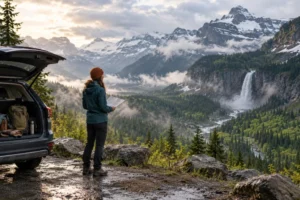

A trip that combines mountains and coastlines sounds almost perfect. You might spend one morning hiking above the clouds and, a few days later, paddle along sea cliffs, explore coastal trails, or swim from a quiet beach.
The challenge is that these environments operate very differently.
Mountain adventures depend on elevation, temperature, trail conditions, physical recovery, and sometimes acclimatization. Coastal travel adds tides, surf, wind, currents, water temperature, and changing access along beaches or cliffs.
That makes advanced adventure itineraries for mountain and coastal regions more complicated than simply placing several outdoor activities on a calendar.
A strong itinerary connects the two environments logically while leaving enough space for weather changes, tired legs, delayed transport, and unexpected closures.
The U.S. National Park Service recommends considering weather, terrain, water hazards, wildlife, personal ability, permits, equipment, and backup activities when planning outdoor trips.
The objective is not to control nature. It is to create a trip that can adapt when nature changes the plan.
1. Design the Route Before Choosing Every Activity
Start with geography.
If your journey includes mountains and coastline, look for a route that progresses naturally rather than repeatedly returning to the same transportation hub.
Imagine a 10-day trip. You might spend the first three nights near lower mountain trails, move higher for another two nights, use Day 6 as a transition and recovery day, then spend the final four nights along the coast.
Think in Adventure Zones
Instead of changing hotels every night, divide the trip into activity zones.
A mountain base can support hiking, climbing, scenic drives, or cycling. A coastal base might provide kayaking, snorkeling, beach hiking, surfing, or wildlife tours.
Staying several nights in each zone reduces packing and gives you alternative days when conditions are poor.
Check road access, trailheads, transfer times, and seasonal closures before booking accomodation. A route that looks short on a map can involve slow mountain roads or limited coastal transportation.
Efficient geography creates more adventure time without making the schedule feel rushed.
2. Sequence Mountain Activities Around Altitude and Effort
Do not schedule the hardest mountain activity simply because it fits neatly on Day 1.
Your body may need time to adjust.
CDC guidance explains that altitude illness can affect unacclimatized travelers at higher elevations and recommends gradual ascent rather than moving too high too quickly. The acute acclimatization process during the first several days at altitude is particularly important.
If your destination reaches significant elevation, begin with easier activities.
A short trail, scenic walk, or moderate cycling day can work better early in the trip than immediately attempting the biggest summit.
Then place your most demanding hike after some adjustment.
The same principle applies even when altitude is not extreme. Long ascents, technical terrain, and heavy backpacks create fatigue that can carry into the following day.
Use an intensity rhythm such as moderate → hard → easy instead of stacking three difficult adventures consecutively.
Your itinerary should become stronger as the trip progresses, not collapse from exhaustion halfway through.
3. Treat Tides as Part of the Coastal Schedule
Mountain travelers often organize around elevation and weather. Coastal travelers also need to think about water movement.
Tides can determine whether a beach route, cave, headland, or shoreline trail is accessible at all.
Olympic National Park, for example, warns that some coastal locations are passable only at lower tides and recommends carrying tide information and checking NOAA predictions before coastal hikes.
NOAA provides official U.S. high and low tide predictions along with current and water-level information for coastal planning.
This creates a different kind of itinerary.
Instead of deciding, “We will hike the coast at 10 a.m.,” you may need to determine the safe tidal window first and build the rest of the day around it.
Surf and currents matter too.
The National Weather Service recommends checking local beach conditions before entering the water and warns that rip currents can occur even when the weather looks calm and sunny.
At the coast, the ocean timetable may matter more than your sightseeing timetable.
4. Build Weather Windows Instead of Fixed Adventure Days
Outdoor itineraries become fragile when every activity is assigned to one exact day.
A better approach is creating weather windows.
Suppose you have three days in a mountain area. Instead of permanently scheduling the exposed summit hike for Tuesday, identify Tuesday through Thursday as possible hiking days.
Choose the clearest day once short-range conditions become more reliable.
Use poorer-weather days for forest trails, scenic drives, equipment checks, cafés, cultural attractions, or recovery.
Do the same along the coast.
Strong wind may make kayaking unpleasant while still allowing a protected walking route. Heavy surf could cancel a water activity but create a perfect day for exploring inland villages.
The National Park Service explicitly recommends having backup activities because forecasts, parking availability, closures, equipment problems, and personal energy can all change.
A flexibile itinerary gives you options instead of cancellations.
5. Create a Gear Strategy That Works Across Both Environments
Mountain and coastal adventures can create an enormous packing list if you plan each activity separately.
Look for crossover first.
Quick-drying base layers, sun protection, lightweight rain gear, reusable water bottles, a compact first-aid kit, navigation tools, and a versatile daypack can work in both environments.
Then identify specialized equipment.
Mountains may require trekking poles, warmer layers, climbing equipment, or traction devices depending on the season. Coastal activities could require water shoes, dry bags, flotation equipment, wetsuits, or specialized paddling gear.
Rent bulky technical equipment locally when reputable operators provide suitable options.
This can be particularly useful when your trip also involves flights, buses, or frequent transfers.
Keep wet and dry equipment seperate inside your luggage. A simple waterproof packing system can prevent a morning kayaking session from turning the rest of your suitcase into damp gear.
The best packing list is not the longest one. It is the one that supports every activity without becoming another logistical problem.
6. Put Recovery Between the Mountains and the Coast
Changing environments does not instantly reset your energy.
After three days of mountain hiking, your legs may still be tired when you reach the coast.
Use transfer days strategically.
Instead of finishing a difficult hike at sunset, driving four hours, and beginning a kayaking tour at 7 a.m. the following morning, give yourself space.
A mountain-to-coast transition day can include travel, laundry, equipment rental, groceries, a short walk, and an early night.
This is not wasted adventure time.
It protects the experiences that come afterward.
Recovery days become even more important when altitude is involved. CDC guidance recommends mild activity during the initial adjustment period at higher elevations and emphasizes gradual acclimatization.
A well-placed recovry period can therefore improve both performance and enjoyment.
Build your itinerary around usable energy, not simply available hours.
7. Prepare Different Backup Plans for Mountains and Coastlines
A generic Plan B is not enough for a trip covering two very different environments.
Mountain alternatives should account for storms, snow, trail conditions, visibility, altitude, and physical fatigue.
Coastal alternatives need to consider tides, wind, surf, currents, and water temperature.
The National Park Service recommends reviewing conditions when you arrive and changing plans when closures, weather, equipment, or personal readiness make the original activity unsuitable.
Create backup activities that reduce exposure to the original hazard.
If the mountain ridge is unsafe because of high wind, another exposed peak is not a useful alternative. Choose a lower forest route.
If the ocean is rough, replace kayaking with a coastal viewpoint, inland trail, or local cultural activity rather than another water-based plan.
Leave No Trace also recommends preparing for extreme weather, hazards, emergencies, regulations, and periods of heavy use before outdoor trips.
Finally, share significant backcountry plans with someone who is not joining the activity. In remote places, do not assume your phone will solve every emergency.
Advanced adventure planning is partly about knowing when changing direction is the smartest decision.
Advanced mountain-and-coastal itineraries work best when the environments are treated as connected but different adventure systems.
Build the route around logical bases, sequence demanding mountain activities carefully, and incorporate altitude adjustment when necessary.
Along the coast, treat tide, surf, and current information as real scheduling constraints rather than optional details. Use weather windows, crossover gear, transition days, and realistic recovery periods to keep the itinerary resilient.
Most importantly, prepare alternatives that actually work under different conditions.
Before booking your next mountain-to-coast adventure, map every major activity according to effort, weather sensitivity, access, and consequences if it is canceled.
Then add breathing room. A slightly less crowded itineray usually creates more opportunities to enjoy the landscapes you traveled so far to experience.