A trip can have perfect weather, beautiful hotels, and famous attractions yet still feel strangely disconnected.
Often, what turns sightseeing into a genuinely memorable experience is not another landmark but understanding how people around you communicate, eat, celebrate, dress, and behave in everyday situations.
That is why learning how local customs can shape the quality of travel experiences is worth doing before you arrive.
Customs are not simply complicated rules designed to catch visitors making mistakes. They are often connected to community identity, history, religion, family relationships, social expectations, and traditions passed between generations.
UNESCO notes that cultural heritage includes living practices such as rituals, festive events, oral traditions, craftsmanship, and social customs – not only monuments and historic objects.
Understanding a few of these practices can make conversations easier and cultural experiences more meaningful.
You do not need to imitate local people perfectly. The goal is simpler: notice that your normal way of doing something is not necessarily the only normal way.
1. Greetings Can Set the Tone for Every Interaction
A greeting looks like a tiny part of travel, but it often creates the first impression.
In some places, casual conversation with strangers starts quickly. Elsewhere, introductions are more formal and may involve titles, particular gestures, or greater physical distance.
Even handshakes, eye contact, bows, cheek kisses, and the order in which people are introduced can carry different meanings.
UNESCO points out that social practices such as greeting ceremonies can range from casual interactions to elaborate customs that help express community identity.
Travelers do not need to memorize an etiquette textbook.
Learn a local greeting, watch how people interact, and adjust gradually. If everyone addresses older people formally, that is useful information. If service employees begin conversations with a greeting before discussing business, return the courtesy.
Small efforts can make interactions feel less transactional.
2. Dining Customs Can Change How You Experience Local Food
Trying regional food is easy. Understanding how people eat it can reveal much more.
Meal times, table manners, tipping expectations, food sharing, restaurant pacing, and ordering styles differ significantly between cultures.
A traveler accustomed to quick dinners might initially interpret slow restaurant service as inefficient, even when a long meal is considered part of normal social life.
In another destination, sharing several dishes may be more common than ordering individual plates.
Before deciding that something is unusual or inconvenient, observe what other diners are doing.
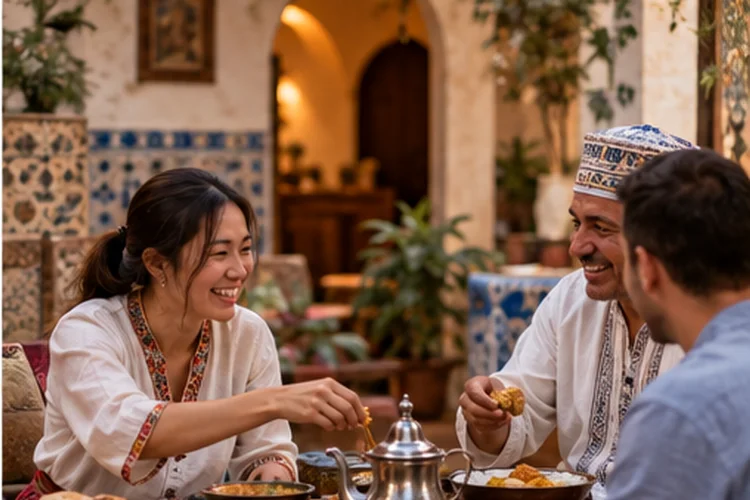
Local dining culture can also extend beyond restaurants. Morning markets, bakeries, street food, family meals, tea traditions, coffee rituals, and seasonal dishes can reveal how food connects with work schedules, religion, climate, and social life.
Travel becomes richer when a meal is not simply something to photograph but something to understand.
3. Dress Expectations Can Affect Access and Comfort
Packing entirely according to weather can occasionally create problems.
Religious buildings, traditional communities, ceremonies, upscale restaurants, and certain cultural sites may have dress expectations that are different from ordinary tourist areas.
Research these before arriving.
You may need covered shoulders, longer trousers or skirts, head coverings, or footwear that can easily be removed. Even where no written rule exists, dressing more conservatively may be appropriate in particular settings.
This is especially important at sacred sites.
UNESCO notes that some social practices and rituals involve restricted access or customary rules regarding participation.
Treat those boundaries as part of the cultural experience rather than an inconvenience.
Keeping a lightweight scarf or an additional layer in your day bag can make spontaneous visits easier without significantly changing how you normally dress.
A little preparation prevents an otherwise avoidable awkard moment at the entrance.
4. Photography Etiquette Can Influence Local Relationships
Travel and photography are almost inseparable now, but not everything visible is automatically available for documentation.
A colorful market vendor, religious ceremony, traditional costume, private home, or child may create an interesting image. That does not necessarily mean taking the photograph is appropriate.
Ask before photographing people closely.
Pay particular attention during ceremonies, worship, funerals, and cultural events. Some practices may be public but still contain moments that communities consider private or sacred.
UNESCO emphasizes that cultural traditions belong to the communities that practice and transmit them, while some rituals may appropriately limit participation or access.
Put the camera away when necessary.
Sometimes experiencing a cultural moment without trying to document it actually creates a stronger memory.
Responsible photography is less about learning one universal rule and more about recognizing when someone else’s dignity matters more than your content.
5. Communication Styles Go Beyond Language
Knowing a few phrases in the local language can help enormously, but communication involves much more than vocabulary.
Tone, silence, directness, gestures, personal space, humor, and conversational pacing all vary.
Some cultures value very direct communication. Others soften disagreement or avoid saying “no” openly. A response that seems vague to a visitor may actually be a polite way of declining something.
Gestures also deserve caution.
A hand signal that seems harmless at home may carry a very different meaning elsewhere.
Instead of trying to master every possibility, practice observation.
Watch how people queue, how loudly they speak in public spaces, how customers get a server’s attention, and whether strangers regularly make small talk.
Learning simple phrases such as hello, thank you, excuse me, and please also signals that you recognize yourself as a visitor rather than expecting everyone else to adjust automatically.
You may pronounce something incorectly, but respectful effort usually communicates more than linguistic perfection.
6. Religious and Festive Customs Need Extra Awareness
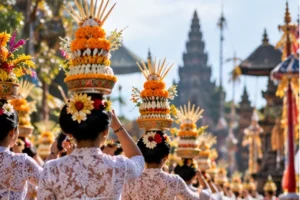
Festivals can be some of the most memorable moments of a trip because they bring music, clothing, food, rituals, families, and public life together.
They can also be misunderstood when travelers treat them purely as entertainment.
UNESCO describes rituals and festive events as social practices that can reinforce community identity and connect people with collective history and memory. Some are broadly public, while others contain elements intended only for particular community members.
Before attending, learn what the occasion represents.
Find out whether alcohol is appropriate, whether certain clothing is expected, whether photography is restricted, and whether visitors are encouraged to participate or mainly observe.
Do not assume a festival exists for tourists simply because tourists are allowed to watch it.
ICOMOS’s 2022 Cultural Heritage Tourism Charter emphasizes respect for host communities and encourages tourism management that considers their cultural identity, rights, and participation.
Approaching the event as a guest rather than a customer changes the entire experience.
7. Everyday Customs Can Reduce Travel Friction
Not every useful cultural habit is dramatic.
Small everyday conventions often have the biggest impact on travel comfort.
Learn how queues work. Check whether shops commonly close during particular hours. Understand whether cash remains important, whether tipping is expected, and whether public transportation requires validating a ticket before boarding.
Research attitudes toward punctuality too.
In one destination, arriving exactly on time might be expected. Somewhere else, social schedules may be considerably more relaxed.
Noise expectations can also vary between public transportation, residential neighborhoods, cafés, and nightlife districts.
Rather than labeling unfamiliar behavior as inefficient, rude, or strange, treat it first as information.
This mindset reduces unnecessary frustration.
Travelers often enjoy destinations more once they stop expecting ordinary life to function exactly as it does at home.
Flexibility becomes a cultural skill as much as a logistical one.
8. Respect for Customs Can Lead to Better Local Experiences
Understanding local norms does not guarantee that strangers will invite you into their homes or reveal secret places.
What it can do is make interactions more comfortable.
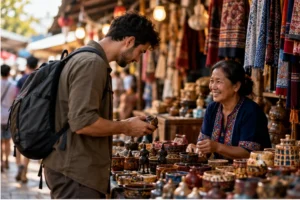
A market vendor may become more conversational when you greet them properly. A local guide may explain more when visitors show genuine curiosity rather than treating traditions like spectacles.
Respect can also influence where your money goes.
Choosing local guides, craftspeople, cultural organizations, and community-run experiences helps connect tourism spending with the people whose traditions make a destination interesting.
ICOMOS emphasizes stronger host-community participation in cultural tourism, including the involvement of traditional and Indigenous custodians in how heritage tourism is planned and managed.
This does not mean every travel decision needs to become a moral calculation.
It means remembering that culture is not simply another product to consume.
The people you meet are participants in their own living culture – not supporting characters in your vacation experiance.
9. Stay Curious Without Trying to “Become Local”
“Travel like a local” sounds appealing, but visitors remain visitors.
And that is perfectly fine.
You do not need to copy every custom, pretend to understand traditions instantly, or claim authenticity after spending four days somewhere.
A better goal is cultural curiosity.
Ask questions when appropriate. Listen carefully. Accept corrections gracefully. Learn why practices exist before deciding what you think about them.
UNESCO describes intangible cultural heritage as living knowledge and practices passed between generations and continually recreated by communities rather than traditions permanently frozen in one historical form.
That means cultures are complex and changing.
Avoid assuming one person’s behavior represents an entire country, religion, or community.
The more comfortable you become with that complexity, the more meaningfull travel can become.
Local customs can shape travel in ways that no hotel upgrade or attraction ticket can replace.
Greetings influence first impressions, dining habits reveal social life, dress expectations affect access, and communication styles can determine whether everyday interactions feel comfortable or confusing.
Learning these customs does not require becoming an expert. A little research, careful observation, and willingness to adjust are usually enough.
Most importantly, approach unfamiliar behavior with curiosity before judgment.
Before your next journey, research five simple things about your destination: greetings, dining etiquette, dress expectations, photography norms, and one important local tradition.
Those few minutes of preparation can reduce awkward moments while opening the door to deeper conversations, stronger cultural understanding, and a far more rewarding trip.