Europe’s historic regions are often more rewarding when explored as connected cultural landscapes rather than collections of famous cities. Tuscany is more than Florence, Burgundy extends beyond Dijon, and Andalusia cannot be understood through Seville alone.
Architecture, food, religious traditions, landscapes, crafts, languages, and centuries of trade often connect places across an entire region.
That is why advanced cultural itineraries for historic European regions should begin with stories rather than attraction lists.
The Council of Europe’s Cultural Routes programme takes a similar approach. Launched in 1987, it connects places through shared themes involving architecture, religion, gastronomy, literature, landscapes, art, and other elements of European heritage.
The programme now includes more than 45 certified cultural routes. For travelers, the lesson is simple: stop thinking only in terms of individual landmarks.
A meaningful cultural journey connects historic cities with smaller towns, landscapes, local traditions, and contemporary communities. With the right pacing, transportation strategy, and research, the region itself becomes the destination.
1. Choose a Cultural Theme Before Choosing Every Stop
Start by deciding what story you want the journey to tell.
A trip through Burgundy might revolve around medieval religious history, vineyard landscapes, gastronomy, and historic towns. An Andalusian itinerary could explore Islamic, Jewish, and Christian influences alongside flamenco, architecture, and regional food.
The theme becomes your filter.
Instead of adding every famous town nearby, choose places that strengthen the story. This prevents an itinerary from becoming a random sequence of attractive old centers.
The Council of Europe defines its Cultural Routes as networks of sites and geographical areas connected by a shared historical or cultural theme rather than simply physical roads.
Travelers can borrow exactly that idea.
Your route might follow Roman heritage, medieval pilgrimage, Renaissance art, Jewish history, traditional wine regions, industrial heritage, or historic thermal towns.
When destinations share a cultural connection, the journey feels continuous rather than fragmented.
2. Mix Major Heritage Cities With Smaller Historic Towns
Large European cities usually provide the strongest museums, transportation connections, and major monuments.
Smaller towns often provide context.
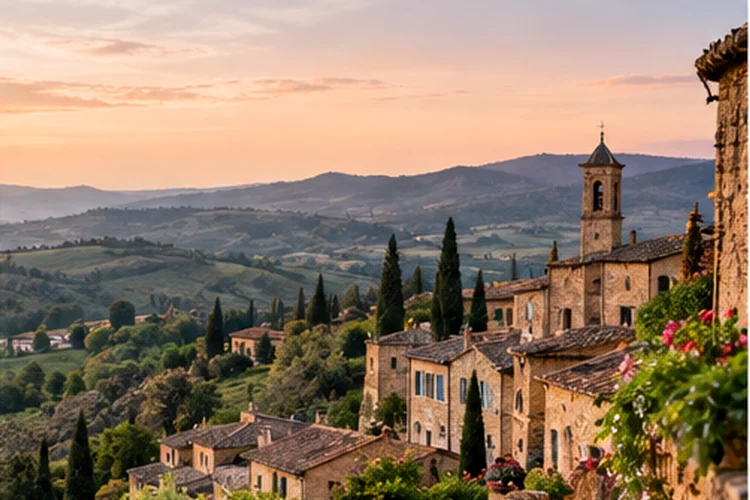
Imagine exploring Tuscany entirely through Florence. You would see extraordinary Renaissance heritage, but you would miss much of the region’s hill-town architecture, agricultural landscape, village life, and local identity.
The same principle works across Europe.
A Central European journey could combine Prague or Vienna with smaller towns and rural areas. A Rhine itinerary might include major urban centers alongside historic settlements, castles, vineyards, and riverside communities.
UNESCO’s Historic Urban Landscape approach encourages people to understand historic places as systems involving buildings, landscapes, intangible traditions, communities, and environmental factors—not simply isolated monuments.
That makes smaller places especially valuable.
They help explain how history extended beyond royal palaces, cathedrals, and capital cities.
3. Design the Route Around Geography and Historical Connections
Culture should guide the itinerary, but geography still matters.
A beautifully researched route becomes exhausting if every stop requires five hours of transportation.
Plot destinations on a map before booking anything. Look for natural regional corridors created by rivers, old trade routes, railway lines, pilgrimage paths, valleys, or historic roads.
Create Regional Bases
Instead of changing hotels every night, choose strategic bases.
Four nights in one well-connected town can support several short excursions to nearby villages, archaeological sites, vineyards, or castles.
This creates more time for exploration and less time managing luggage and accomodation check-ins.
It also lets you experience the same place at different times of day. Historic centers can feel dramatically different after day-trippers leave.
Regional bases work particularly well when public transportation is strong. In more rural areas, renting a car for part of the journey may provide access to places difficult to reach by rail.
The goal is not covering the largest geographical area. It is connecting places efficiently enough that the history remains the focus.
4. Build Layers of History Into Each Day
European regions rarely belong to one historical period.
A city might contain Roman foundations, medieval streets, Renaissance buildings, nineteenth-century industrial neighborhoods, and contemporary cultural spaces within a few kilometers.
Use that layering deliberately.
Instead of scheduling four medieval churches in one day, combine different perspectives. Visit an archaeological site in the morning, explore a living market around lunch, tour a historic building later, and spend the evening somewhere connected to contemporary local culture.
UNESCO’s Historic Urban Landscape framework specifically looks beyond physical preservation and includes intangible heritage, cultural diversity, socioeconomic factors, and community values.
This makes historical travel feel less like moving between frozen monuments.
The old city becomes connected with the modern one.
That connection is important because heritage continues to influence housing, food, celebrations, street patterns, crafts, and identity long after a particular historical period has ended.
5. Include Living Traditions Alongside Historic Sites
Castles and cathedrals are only one part of regional heritage.
Search for food traditions, craftsmanship, music, festivals, agricultural practices, local languages, and religious customs still practiced today.
A historic wine region, for example, becomes much more understandable when you visit both an old monastery and a working vineyard.
Likewise, a region associated with traditional textiles becomes more interesting when you see historic examples in a museum and then meet contemporary makers still using related techniques.
The Council of Europe’s Faro Convention emphasizes that cultural heritage matters partly because of the meanings and values communities attach to places and practices.
That is a useful travel principle.
Do not study heritage seperately from the people living with it.
Whenever possible, combine historic interpretation with experiences led by local guides, artisans, food producers, cultural organizations, or community institutions.
6. Slow the Pace Around Important Heritage Areas
Historic regions reward time.
Spending two nights somewhere instead of one can completely change your understanding of the place.
You can visit the major heritage site early, walk through surrounding neighborhoods later, eat somewhere away from the main tourist streets, and return to the historic center after the crowds disappear.
Slow pacing also helps reduce tourism pressure.
UNESCO’s Sustainable Tourism Toolkit emphasizes managing visitor movements and behavior to protect heritage, improve visitor experiences, and reduce negative effects on host communities.
Travelers can contribute simply by varying timing.
Visit famous places early or later in the day. Explore secondary towns when major destinations are busiest. Stay overnight in places that most visitors treat only as day trips.
You often discover that heritage feels more powerful when you are not experiencing it shoulder-to-shoulder with hundreds of other visitors.
7. Time the Journey Around Regional Cultural Events
Dates can change the cultural depth of an itinerary.
Historic towns may host religious celebrations, harvest festivals, traditional markets, heritage weekends, music programs, or temporary exhibitions connected to regional history.
European Heritage Days are particularly interesting for cultural travelers. The Council of Europe and European Commission initiative opens thousands of monuments and cultural sites across participating countries, including some normally inaccessible to the public.
Check regional event calendars before finalizing your dates.
But avoid building the entire journey around one event unless it genuinely matters to you. Festivals can also create higher hotel prices, transportation pressure, and large crowds.
A good strategy is to anchor one or two days around a cultural event while leaving the rest of the itinerary flexible.
That balance creates context without turning the entire journey into an event schedule.
8. Use Museums as Context, Not the Whole Experience
Museums are extremely valuable on heritage trips, especially early in the itinerary.
A good regional museum can explain political boundaries, architectural styles, migrations, religious history, industries, and local traditions before you encounter them outside.
Visit selectively, though.
After several museums in consecutive days, even extraordinary collections can begin to blur together.
Use museums to prepare yourself for what you will see in the landscape.
For example, learn about medieval trade inside a museum, then visit the market squares, ports, warehouses, bridges, or merchant houses connected with that trade.
This creates a stronger memory because information becomes attached to physical places.
The most meaningful cultural experiance often happens when indoor interpretation and outdoor exploration reinforce each other.
9. Leave Room for Cultural Detours
An advanced itinerary should contain structure without becoming rigid.
Historic regions are full of unexpected stops: a monastery visible from the road, a tiny local museum, a village festival, an archaeological site, or a recommendation from someone you meet.
Keep some unscheduled time.
If every morning, lunch, museum, train, and evening activity is booked months ahead, there is nowhere for discovery to fit.
The Council of Europe’s Cultural Routes programme itself promotes discovering less-known destinations as part of wider networks of shared history and heritage.
Apply the same philosophy personally.
A famous UNESCO-listed city may anchor the route, but a small neigborhood, monastery, village, or workshop you never expected to visit might eventually become its most memorable part.
Good cultural planning gives you enough knowledge to recognize an interesting detour when you find one.
Advanced cultural itineraries work best when historic European regions are treated as connected landscapes rather than collections of monuments.
Choose a cultural theme, combine major heritage cities with smaller towns, and build the route around both historical connections and practical geography.
Include museums, landscapes, living traditions, local communities, and contemporary culture while giving important places enough time to breathe.
Use strategic bases instead of changing hotels constantly, check regional events before choosing dates, and leave room for discoveries that cannot be planned.
Before your next European heritage trip, choose one region and identify its central historical story.
Then build your itinerary outward from that story rather than from a generic list of attractions. The result can feel less like sightseeing and much more like traveling through history itself.