Europe’s famous landmarks deserve their reputation. Seeing the Eiffel Tower, Colosseum, Charles Bridge, or canals of Amsterdam for the first time can be genuinely memorable.
The problem starts when an entire trip becomes a race between attractions that appear on exactly the same lists everyone else is following.
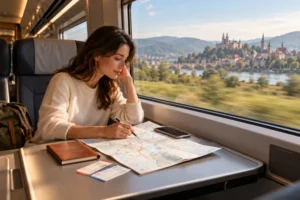
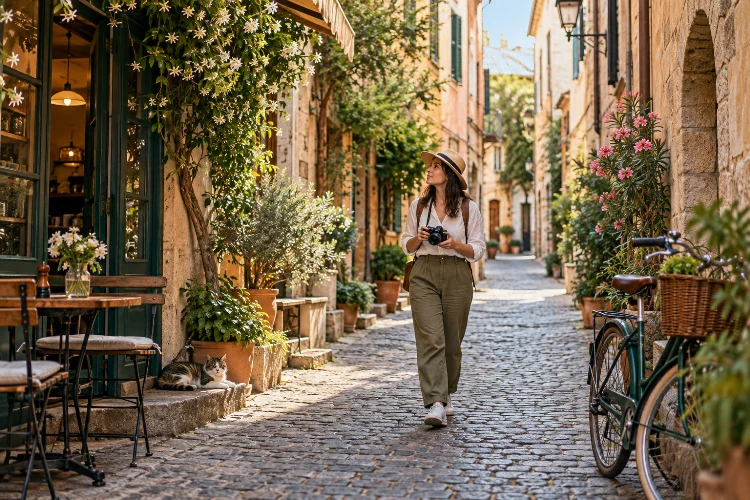
Learning how to explore European cities without following tourist routes does not mean deliberately avoiding everything popular. It means looking beyond the standard sightseeing circuit and giving yourself space to discover how a city actually works.
That might involve taking a tram to a residential district, visiting a neighborhood market in the morning, walking along an ordinary riverfront, eating where office workers have lunch, or spending an afternoon in a park with no major monument nearby.
This slower approach can reveal architecture, food, street life, and cultural habits that are easy to miss when every hour is planned around famous attractions.
The goal is simple: see the landmarks you genuinely care about, then leave enough room for the city itself to surprise you.
1. Start With Neighborhoods Instead of Attractions
Traditional itinerary planning usually starts with a list of landmarks. Try reversing the process.
Open a city map and look at neighborhoods first. Identify the historic center, residential areas, university districts, creative quarters, waterfront zones, parks, and neighborhoods known for food or local markets.
This immediately changes how you think about the destination.
Instead of traveling across Paris for five unrelated attractions, for example, you could spend several hours exploring one district and everything around it. The same idea works in Lisbon, Berlin, Rome, Vienna, Budapest, Copenhagen, and dozens of other European cities.
You begin noticing bakeries, courtyards, independent shops, playgrounds, architecture, and ordinary routines between destinations.
Research from the European Commission’s Quality of Life in European Cities program looks at factors including public transport, cleanliness, safety, housing, and environmental quality across 83 European cities.
It is a useful reminder that cities are defined by everyday life, not simply their monuments.
Choose one neigborhood and give yourself two or three hours with no detailed checklist.
2. Use Public Transport to Escape the Tourist Core
The most heavily visited area of a European city is often surprisingly small.
Walk ten minutes away from the main square or travel four Metro stops from a famous landmark and the atmosphere can change dramatically.
Public transport makes this kind of exploration easy.
Instead of using Metro systems, trams, and buses only to connect tourist attractions, use them to reach places you would otherwise never consider visiting.
Pick a market, park, waterfront, local shopping street, or café district farther from the center and build half a day around it.
You do not need to travel to remote suburbs without a purpose. The idea is to expand your travel radius beyond the tiny central zone where tourism is concentrated.
Walking and cycling are also increasingly important parts of European urban mobility policy, with the European Commission highlighting their role as affordable, low-emission ways to move around cities
Combine transit with walking. Ride farther out, then explore slowly on foot.
3. Visit Markets Where People Actually Shop
Markets are among the easiest places to observe everyday urban life.
Some famous markets have become attractions themselves, but many cities still have neighborhood food halls, weekly street markets, flea markets, farmers’ markets, and produce stalls serving local residents.
Visit in the morning when possible.
Instead of arriving only to photograph displays, notice what people are buying. Look at seasonal produce, bread, cheese, seafood, prepared food, flowers, and household goods.
Markets can also help travelers understand regional differences.
The ingredients and snacks found in Palermo can feel very different from what appears in Amsterdam, Budapest, or Copenhagen. These differences tell you something about climate, migration, food traditions, and local routines without requiring a formal museum visit.
Buy something small and have breakfast or lunch nearby.
Ask your acommodation host or hotel staff which market they would use themselves rather than simply asking for “the best market for tourists.”
That slight change in wording often produces a much more interesting suggestion.
4. Treat Parks and Public Spaces as Destinations
Travel itineraries often treat parks as empty spaces between attractions. That misses an important part of European urban culture.
Public squares, riversides, urban forests, neighborhood gardens, canals, and parks are places where cities slow down.
They are particularly useful around lunchtime, late afternoon, or after several hours inside museums.
The European Commission notes that environmental quality plays a major role in urban quality of life, including access to nature, air quality, noise levels, and the ability of cities to manage rising temperatures.
Around 70% of Europeans live in urban areas, making these spaces especially relevant to daily city life.
Urban green areas can also help with heat, flooding, pollution, biodiversity, and general wellbeing
Bring coffee, sit for half an hour, and watch what happens.
You may learn more about how residents use their city than you would during another rushed attraction visit.
5. Change the Time You Explore Popular Areas
You do not always need to abandon famous places. Sometimes you simply need to visit them differently.
Historic centers can change dramatically depending on the hour.
A square packed with tour groups at noon may feel almost peaceful early in the morning. A waterfront filled with daytime visitors may become a relaxed local meeting place toward evening.
If you want to see popular landmarks, consider scheduling them outside peak periods when practical.
Then use the busiest part of the day to explore quieter districts.
This matters because European tourism volumes remain extremely high. Eurostat recorded more than 3 billion nights spent in EU tourist accommodation in 2024, the highest level on record at that point
You cannot eliminate crowds from popular European destinations, but you can change when and where you encounter them.
A small timing adjustment can completely change the experience.
6. Search for Local Culture Instead of “Things to Do”
Search language affects search results.
Type “things to do in Prague” and you will probably see the same famous attractions repeatedly.
Search for “independent cinema Prague,” “local design market Prague,” “community events Prague,” or “live music this week Prague,” and the results become much more interesting.
Look for libraries, small galleries, cultural centers, neighborhood festivals, bookstores, food events, temporary exhibitions, and local performances.
Culture in European cities extends well beyond internationally famous museums. The European Commission highlights the role of cultural and creative activity in shaping city identity, regional development, heritage, and urban life
Temporary events are especially useful because they connect your visit to a particular moment.
A street festival or neighborhood concert that happens only during your stay may become more memorable than something available every day of the year.
Check local cultural calendars occassionally during the trip rather than planning everything months ahead.
7. Eat According to Daily Routines
Food is another area where tourist routes become predictable.
Restaurants immediately beside major landmarks often cater primarily to visitors. Walk several streets away and choices can become very different.
Watch where people eat during ordinary parts of the day.
Near offices, universities, markets, transport hubs, and residential neighborhoods, you may find bakeries, cafeterias, lunch counters, small family restaurants, and inexpensive regional food that never appears on major travel lists.
Do not assume “authentic” automatically means hidden or old-fashioned.
Local residents also eat pizza, sandwiches, noodles, supermarket lunches, contemporary fusion food, and takeaway meals. Real city food culture includes everyday habits as well as traditional cuisine.
One useful strategy is to save only a few restaurants in advance.
For the rest, choose according to where you happen to be when hunger arrives.
That freedom keeps meals connected to the neighborhood you are exploring instead of forcing you to cross the city for someone else’s online recomendation.
Exploring European cities beyond standard tourist routes is less about avoiding famous attractions and more about widening your definition of what counts as travel.
Use neighborhoods as your starting point, take public transport beyond the historic center, visit local markets, spend time in parks, and explore popular districts at different hours.
Look for current cultural events and allow ordinary meals, streets, and public spaces to become part of the experience.
Most importantly, leave gaps in the schedule.
On your next European city trip, choose the landmarks you truly want to see – but keep at least half a day completely open.
Pick a neighborhood, take a tram or Metro there, and explore without trying to complete a checklist. That unplanned afternoon may become the part of the city you remember best.